


Welcome to our 6 new Minforkers who joined since the last essay “On thriving as a woman in the workplace”. If you haven’t subscribed, join the community of curious thinkers here:
Only when we are truly lost do we find ourselves.
At 25, I moved to London from Johannesburg in search of a new life, studying neuroscience and picking the brains of the best researchers in the world. I dreamed I would meet the love of my life, and we would travel to wild and wondrous places with our friends. My life would be busy, full of joy, ambition, success, parties, books, planes, and deep love.
Four years after immigrating, I lay paralysed by anxiety on my bed without a headboard, approaching thirty, refusing to wake up and look at the UK life I had built. I was unemployed, and living out the terrors of a failed, lonely relationship, crushed by the relentless greyness of a British sky. I lived in a tiny, obnoxiously expensive flat 9085 kilometres away from my family and home.
LinkedIn bombarded me with job ads I felt unqualified for. I needed to do the washing and vacuum the floor. Messages from my friends remained unanswered for days. The thought of breathing felt overwhelming. Bzzzt. Rent just went out of my account - daylight robbery from letting agents who couldn’t wait to rob me more in a few months. I still couldn’t move from my bed, helpless and disappointed, too tired to cry.
What happened? On paper, I had been doing everything “right” - getting a 9-5 job after a master’s at one of the best universities in the world; dating an English guy with a solid friend group and stable career; investing hours into “self-improvement” like habit change, therapy, diets, supplements, pilates, a cold shower in the morning and no blue light before going to sleep.
Yet there I lay, watching the complete eclipse of my life from a whitewashed ceiling.
Frustrated, and guilty for feeling sad, I impulsively attended a contemporary ballet class. I awkwardly stood in the corner of the room with a few other women dressed in leotards and ballet pumps. We all shuffled around the studio like enclosed sheep. Our instructor, Marie, entered the room.
“Walk!” Marie said, “Forward, backwards, unpredictably, walk!”. A few confused glances later, we walked cautiously among each other, keeping a polite distance. “Walk closer to one another!”, she said behind a beautiful smile, “and faster!”. We did as we were told, and lurched onward with the collective tension of a dentist’s waiting room building in our shoulders and bodies. Then giggles started here and there. A few apologies and side steps, too.
“Ok, now, walk with your eyes closed!”. We almost stopped in our tracks. Marie, sensing our apprehension announced: “Come on. Close your eyes. You won’t walk into anyone. Your body knows what to do. When you relax and trust your body, you won’t bump into anyone.”
Your body knows what to do. Your body knows what to do.
I took a deep breath, closed my eyes and walked. No thoughts, just walking, sensing the nuances of the air on my skin, moving through space as though my body had put one foot in front of the other since the dawn of time. Marie was right. No one collided as we walked, eyes closed, around the studio.
Suddenly, it all made sense. The reason I’d been paralysed by anxiety wasn’t because I was unwell, or a failure. No, my body, my intuition, my soul was unwilling to move, refusing to play the games created by other people. All this time, I ignored these screaming signals and exchanged their wisdom for the advice and testaments of others. While my conscious voice was sleeplessly problem-solving, it overpowered me.
Now, I want to play my own game.
Instead of ignoring their signals, I listened to them, and let them guide me. The powerful and magnificent feeling of surrendering myself to the will of my body and intuitions transformed my life. I’d found my inner compass and followed it.
Since then, I haven’t looked back, and never will.
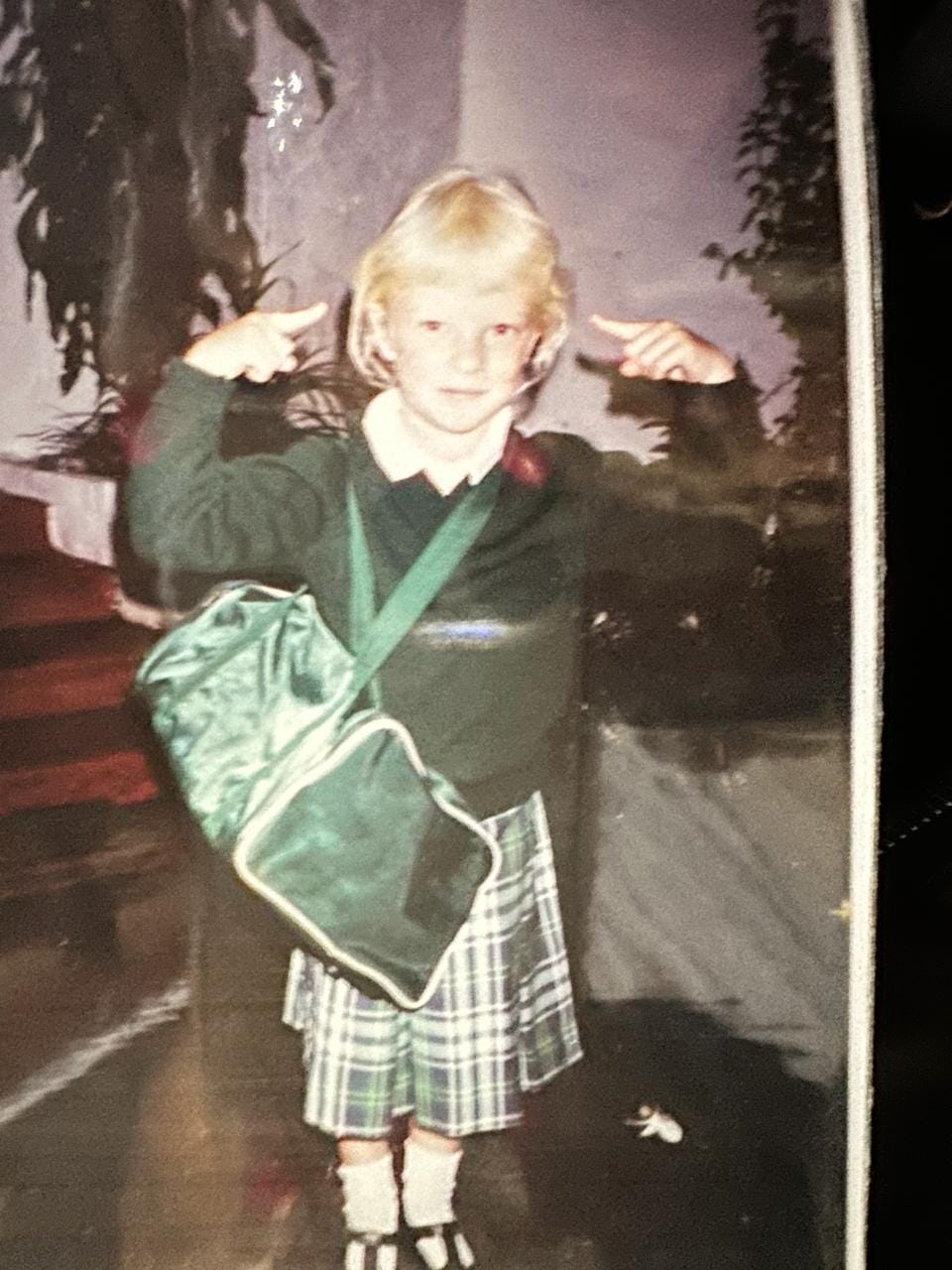
Our biology is ancient and wise and our internal voices are in their evolutionary infancy, despite how humanity has over-relied on our capacity for thought and technological advancement. The body communicates with us but it cannot be heard over our louder, more obvious thoughts. On top of that, our conscious voices blurt out messages that may not be ours. They may come from parents, bosses, partners, friends, ads, movies, memes. “You need a stable job and a salary to live”, “dying alone without a partner is a fate worse than hell”, “You shouldn’t spend so much time relaxing and recovering, you’re lazy and unproductive”, and the list goes on.
We are taught that feelings are wrong, unpredictable, and inappropriate. We as a society have succumbed to a data-centric, research-backed approach to making decisions for ourselves. Which has its uses in technology and medicine, but when this approach is used to navigate our individual human experience, we often, accidentally discount our feelings, shoving our psyches into a state of fear, panic and mistrust.
Instead of acknowledging feelings, we have been told to “manage” them, fix them through therapy, better physical health, or simply suck it up. As a woman, there is an added layer of credibility that we sacrifice if we give into our emotions. We are labelled “hysterical”, and our powerful intuitions are ignored and dismissed.
Humanity has become so disconnected from our bodies, feelings and intuitions that we no longer know what to do with the signals they send us. If we can’t translate physical signals and intuitions into meaningful insights, we will, of course, be misled. It’s no wonder there are several studies demonstrating the unreliability of human intuition.
But your body knows what you want! What you truly want.
Whether your conscious mind likes it or not. Whether your boss, your family, or your partner likes it or not. Terrifying, until you realise that the more you ignore your body, your feelings and intuitions, the more stressed, tense, anxious, and miserable you become. No matter how many times you tell it what it wants, your body is bigger and more powerful than the tiny part of your brain dedicated to reasoning (which - by the way - receives inputs from brain regions responsible for the feeling of reward, fear, and love, so really, the idea that we can be purely logical and reasonable is laughable).
Where does this inner compass lead? To hopelessness, despair and loneliness? Chaos? Anarchy? Not quite. You’ll find that your intuition is altruistic.
It tells you to eat well, seek fitness, and pursue causes deeply aligned with your values. Intuition overrides the unregulated emotions which tell you to eat a cookie though you “know” it’s not what will nourish you. It’ll surgically remove all that doesn’t serve you and feed that which does serve you.
Intuition is ruthless.
It led me through a difficult, but necessary path: I ended a serious but unfulfilling relationship; I surrendered to the life of a writer (thanks for reading ;)); I went back home to South Africa and allowed myself a month to recover from 29 years of unattended psychological and spiritual wounds. If something doesn’t feel right, I don’t fucking do it.
My capacity for joy and pleasure has since developed into a crescendo I never imagined was possible: most days, I feel playful, cheeky, and confident in my stride. On tougher days, I feel nurtured, loved, and beautiful.
Many times a day, I direct my energy toward my body and feelings, without thought. Am I embodying joy right now, in this scenario? Rebelliousness, playfulness, confidence, love? Or am I tense, anxious, suspicious? I allow myself to naturally move toward and away from scenarios, people and careers.
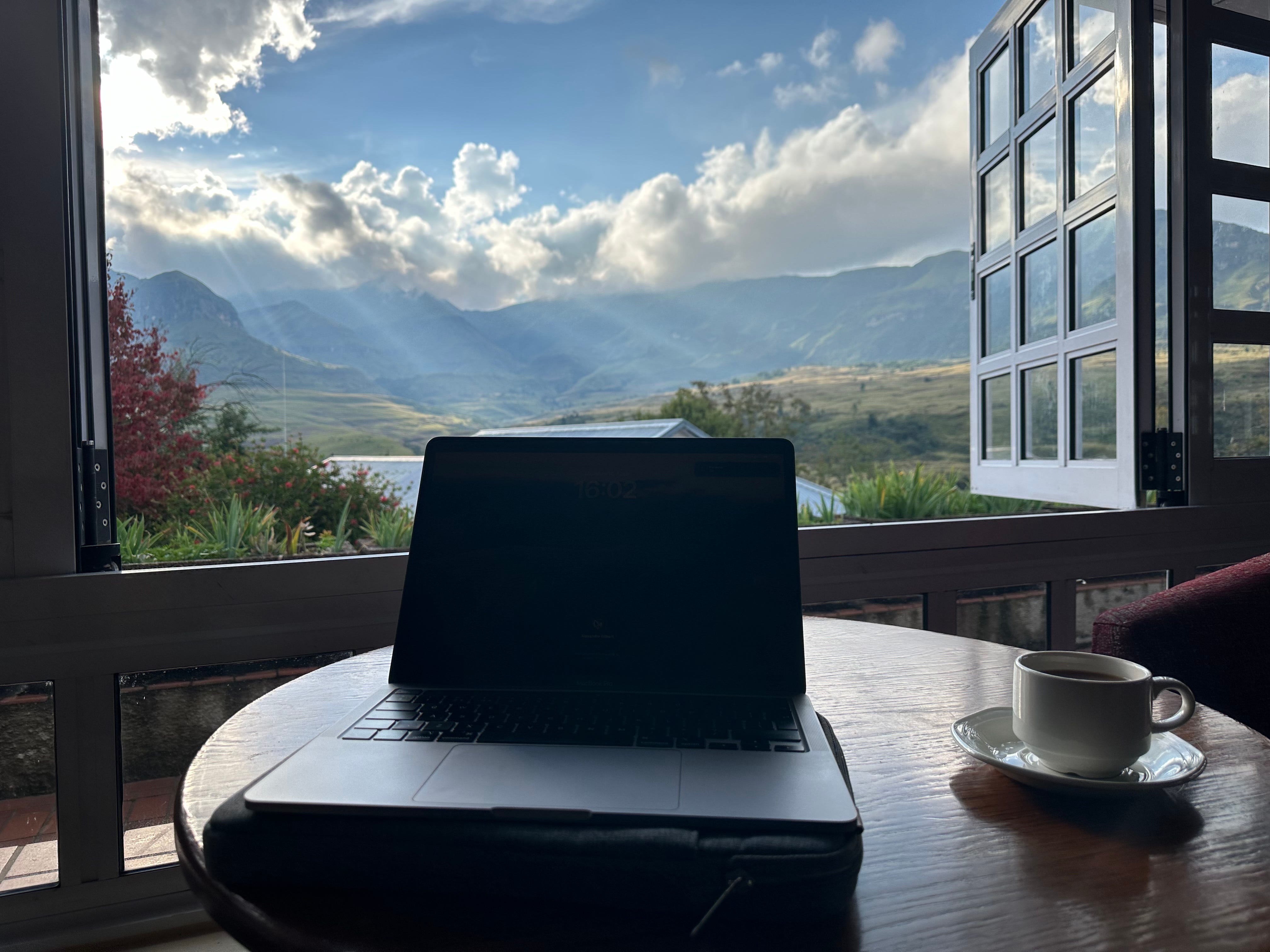
Especially for women, whose biology is cyclical and ever-changing, adapting to the intuition’s desire of the day is essential. Trying to cage it will enrage it (not recommended).
The inner compass is like a physical compass - magnetic. It doesn’t speak. Its hands are moved by the forces of nature, showing us where our True North is. Our True Norths are pulling us toward them. The only thing we can do is surrender. Then step.
It’s up to you what you do with your inner compass.
Thanks for reading Mindfork! Share with your friends if you fancy.